
Schemmer
Newsroom
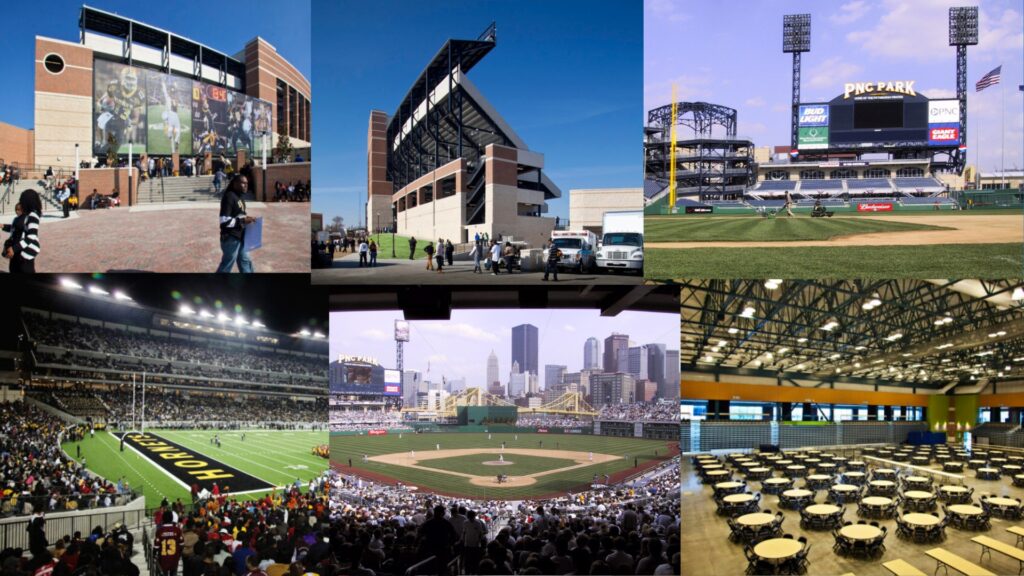
Designing for Experience in Public Assembly Spaces
March 23, 2026 • All, Projects
Think about the last time you were part of a crowd. Maybe it was a packed stadium on a Friday night. A concert where the energy felt electric. A conference where ideas sparked new connections. Maybe even a community event that just felt meaningful.
Those moments don’t happen by accident. They happen in spaces designed specifically for them. That’s the Public Assembly market.
At its core, the Public Assembly market includes facilities built to bring people together at scale. These are spaces designed for shared experiences, often hosting hundreds or even thousands of people at the same time. That includes stadiums and arenas, convention centers, civic spaces, performing arts venues, recreation facilities, student unions, and places of worship.
What ties them together isn’t just size. It’s purpose.
These are places where people gather, connect, celebrate, learn, and experience something together.
More Than Spaces, They’re Experiences
Public Assembly projects are different from most building types because they are not just about function. They are about how people feel inside the space.
Designing for this market means thinking beyond walls and square footage. It requires a real understanding of crowd movement, sightlines, acoustics, safety, accessibility, and especially how a venue can adapt to different types of events.
“Most people think it’s about handling big numbers of people. It is that, but it’s also about understanding how individuals behave within a crowd,” said David Greusel, FAIA, Public Assembly Market Leader.
That is where the difference shows up. People do not move in perfect lines or follow a plan on paper. They hesitate, gather, change direction, and react to what is happening around them. Advanced software allows designers to model crowd behavior to see how public assembly buildings will really work.
“If people have to think too hard about where to go, the design has already failed.”
A well-designed space makes all of that feel natural. A poorly designed one makes it noticeable.
Why the Market Is Evolving
The Public Assembly market is not standing still. Expectations shift constantly, and spaces are having to keep up.
People expect more from the experience now. It is not just about attending an event. Comfort, convenience, and connection all play a role.
“People don’t just attend events anymore. They expect an experience,” Greusel said.
At the same time, spaces are being asked to do more. A venue might host a game one night, a concert the next, and a conference later in the week. That kind of flexibility is no longer optional, and can put a strain on both the venue and its operations staff.
“If the building only works for one thing, it won’t work for very long,” Greusel said.
Technology is also changing how people engage with these spaces. From wayfinding to digital displays, tech has become a major part of the overall experience. The best implementations are the ones people don’t even think about. They just work.
There is also a bigger picture. Many of these facilities serve as anchors for their communities. They support local economies, create gathering places, and help shape a sense of identity. Public assembly venues are often a community’s living room. They often adjoin public plazas that become community gathering places as well, forming sports and entertainment districts that can energize a downtown in any size community.
The Stakes Are Higher Than They Look
On the surface, a stadium is just a venue. A convention center is just a building.
In reality, these spaces carry more weight than that.
They host milestone moments. They shape how people experience a city. They influence whether someone wants to come back—or even relocate to a city.
Decisions made early in planning and design can have long-term impacts on operations, revenue, and how people remember the space.
What Sets Public Assembly Projects Apart
Compared to other markets, Public Assembly projects tend to be more visible, more complex, and more focused on creating an outstanding guest experience.
They are designed for peak moments, not just everyday use. They involve a wide range of stakeholders. And they carry an emotional component that is hard to measure but easy to recognize when it is done well.
It is not just about how the building performs. It is about how it feels to be there.
Looking Ahead
As expectations continue to rise, the Public Assembly market will keep evolving. The bar continues to be raised.
There will be more emphasis on flexibility, more integration of technology, and a stronger focus on long-term performance. But the core ideas will stay the same.
“A good building functions well. A memorable one creates a sense of belonging,” Greusel said.
That is what sets this market apart.
According to Greusel, “We’re not really designing buildings. We’re designing the setting for moments people will remember for the rest of their lives.”
At the end of the day, it is not just about the building. It is about what happens inside it. And how it makes you feel.
SCHEMMER – DESIGN WITH PURPOSE. BUILD WITH CONFIDENCE.
At Schemmer, we believe that great design goes beyond structures; it strengthens communities. As a full-service architecture, engineering, and construction field services consultant, we deliver innovative solutions that enhance the built environment and improve lives.
Since 1959, we have been shaping the future while honoring our legacy. With nine offices across six states in the Midwest, our expertise reaches coast-to-coast, bringing thoughtful, sustainable, and impactful solutions to every project.
Our Comprehensive Services:
- Architecture
- Structural Engineering
- Mechanical Engineering
- Electrical Engineering
- Site/Civil Engineering
- Transportation Engineering
- Water/Wastewater Engineering
- Surveying
- Interior Design
- Geotechnical Engineering
- Field Services
At Schemmer, we don’t just design, we create lasting impact. Let’s design a better future together.