
Schemmer
Newsroom
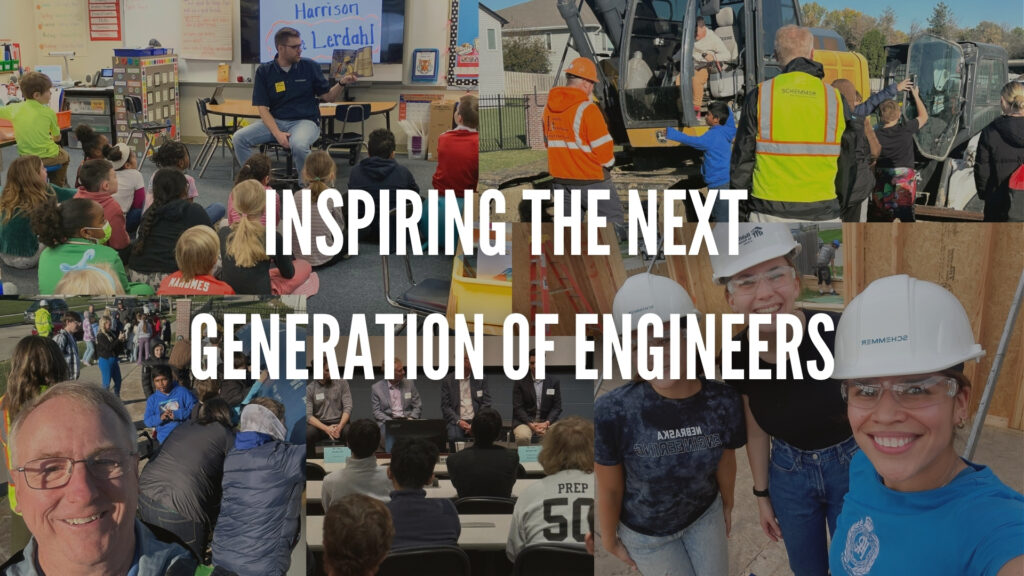
Inspiring the Next Generation of Engineers
February 27, 2026 • All
Engineering is often described by what it produces. Buildings, infrastructure and systems that shape daily life. But for many engineers at Schemmer, the work is less about what gets built and more about the problems solved along the way.
“Engineers in general help solve problems,” said Ana Salgado, civil engineer. “Particularly as a site civil engineer, we assist and help improve our communities. We work with architects and other engineers to create buildings that people use, from manufacturing facilities and schools to hospitals and homes. We are a big part of making our built communities.”
That impact is not always visible, but it is constant.
“If I’m doing my job correctly, you don’t know I have a job,” said Ryan Bell, civil engineer. “It’s not until public infrastructure fails that you know I existed. Stormwater runoff, sanitary sewers, grading and site layout, when it’s all done correctly, it’s seemingly invisible. We solve problems you don’t even know exist yet.”
Engineering also blends technical thinking with creativity and imagination.
“Engineers solve problems using math and science,” said Candace Freilich, electrical engineer. “They can create things, look at what exists and make something new out of it.”
Different paths, shared curiosity
There is no single way into engineering. Some discover it early, while others encounter it through exposure, coursework or mentorship.
“I didn’t know growing up,” Salgado said. “I thought I was going to be a nurse. Engineering wasn’t something I knew about, and I’m the first person in my family to go to college. It was definitely a process of learning and navigating to where I am right now.”
Moments of exposure can shape those decisions.
“Some engineering students came to my class when I was a junior in high school and talked about how engineering is both art and creativity and math and science,” said Ian Plummer, bridge engineer. “Hearing them talk about what they do immediately clicked with me. Before that moment, I didn’t even know it existed.”
For others, the path became clearer as strengths and interests aligned.
“I knew about engineering because of my family, but it probably wasn’t until late high school and early college that I decided it was for me,” Freilich said. “The classes clicked, and I was good at them.”
Curiosity that grows into purpose
Many engineers describe curiosity as the starting point. A desire to understand how things work and why they function the way they do.
“Even back then, I’d take various stuff around the house apart, and it was rewarding putting it back together so it functioned how it originally did,” said Anthony Pospisil, mechanical engineer. “Today, solving problems is still a rewarding feeling.”
That curiosity evolves as engineers begin to see the real-world impact of their work.
“Structural engineers take a look at a building and find ways to make it as safe as possible for occupants by considering expected loads and unforeseen conditions,” said Nick Williams, structural engineer. “It’s about taking the architect’s vision and making it come to life while still being safe.”
Seeing projects move from concept to construction remains a meaningful part of the profession.
“Something that still excites me today is being out in the field and seeing the process happen,” Plummer said. “The things you design becoming reality.”
Advice for future engineers
When reflecting on what students should know about engineering, the guidance centered on authenticity, exploration and confidence.
“There can be imposter syndrome, especially when not many people look like you,” Salgado said. “But where you come from, your culture and everything you’ve learned are a big piece of who you are. Being authentic and true to yourself will be useful as an engineer.”
“It’s beneficial to seek out opportunities to learn more about the field you’re interested in,” Williams said. “Presentations, videos, clubs or STEM activities help you understand what you enjoy.”
“Because I was so good at math and science, it just fit,” Pospisil said. “It made sense, and it was fun.”
While each engineer’s story is different, a shared thread connects them. Curiosity leads to discovery. Exposure creates opportunity. And experience helps shape a meaningful career.
For students exploring engineering, those early moments of interest often become the starting point for something larger. As communities continue to grow and change, engineers remain central to solving problems and shaping the built environment.
Through their experiences and perspectives, Schemmer engineers are helping make that path more visible for the next generation.
SCHEMMER – DESIGN WITH PURPOSE. BUILD WITH CONFIDENCE.
At Schemmer, we believe that great design goes beyond structures; it strengthens communities. As a full-service architecture, engineering, and construction field services consultant, we deliver innovative solutions that enhance the built environment and improve lives.
Since 1959, we have been shaping the future while honoring our legacy. With nine offices across six states in the Midwest, our expertise reaches coast-to-coast, bringing thoughtful, sustainable, and impactful solutions to every project.
Our Comprehensive Services:
- Architecture
- Structural Engineering
- Mechanical Engineering
- Electrical Engineering
- Site/Civil Engineering
- Transportation Engineering
- Water/Wastewater Engineering
- Surveying
- Interior Design
- Geotechnical Engineering
- Field Services
At Schemmer, we don’t just design, we create lasting impact. Let’s design a better future together.