
Schemmer
Newsroom
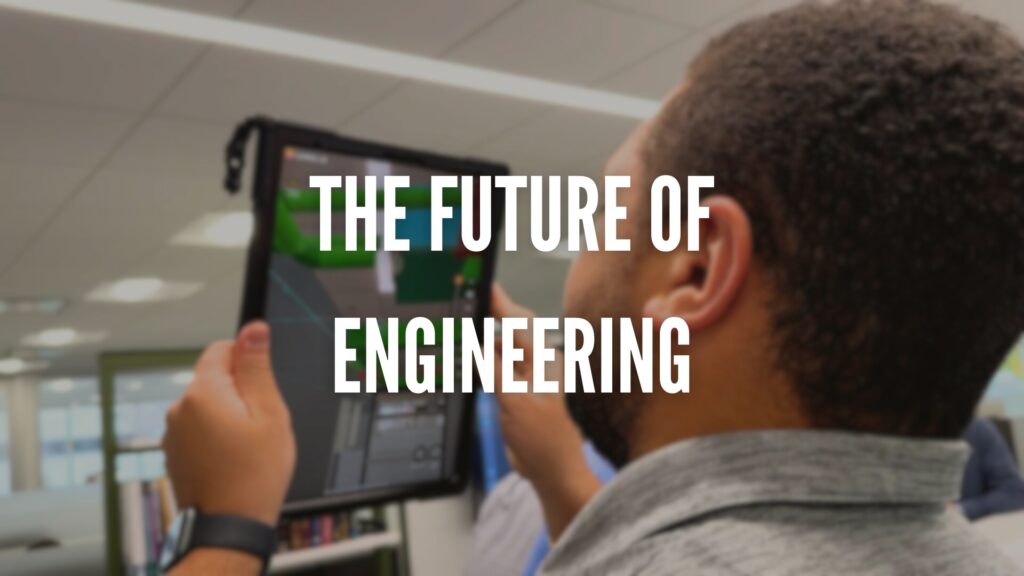
The Future of Engineering
February 26, 2026 • All
Engineering has always been about solving problems. That hasn’t changed. What has changed is how engineers get there.
Across disciplines at Schemmer, one theme continues to surface when talking about the future of engineering: progress is happening fast, but the heart of the profession remains the same. Engineers are still designing systems, shaping communities, and turning ideas into reality. The difference is that today’s tools are expanding what’s possible and how quickly it can happen.
Engineering in the Digital Age
For many engineers, the evolution is personal. Early in their careers, drafting by hand and working through paper redlines was simply part of the process. Today, that workflow has largely shifted into fully digital environments.
“When I first started, I was given a set of red lines, someone marking things on paper. Now we have ways to make all of that digital and make our jobs a little bit more efficient,” said Ana Salgado, Civil Engineer.
Collaborative platforms, advanced modeling software, and cloud-based tools now allow teams to work together in real time, often across offices and disciplines. Tasks that once required multiple iterations and manual markups can now be refined quickly, reducing delays and helping teams stay aligned from concept through construction.
How Technology is Changing Engineering
Software advancements continue to push engineering forward. Updates to design platforms, modeling tools, and visualization software are steadily improving the speed and accuracy of detailing and documentation.
“The different softwares all have updates each year, so they just get better and better. It’s kind of sped up the process of design and detailing, and I expect that to continue,” said Ryan Bell, Civil Engineer.
At the same time, data collection methods are evolving just as quickly. Drone scanning, LiDAR, and other field technologies are transforming how engineers gather site information and approach analysis.
“The new technologies we’re using like drone scanning and lidar help us get the information on the ground that we need. We’re no longer on pen and paper,” Bell said.
In specialized areas like bridge engineering, these tools are also reshaping inspection practices.
“For me, in bridge engineering, I’d say drones are going to help on the inspection side and help identify issues or deficiencies earlier,” said Ian Plummer, Bridge Engineer.
Together, these advancements provide more precise data while reducing time in the field, ultimately leading to better-informed design decisions.
The Role of AI
No conversation about the future of engineering is complete without mentioning artificial intelligence. While AI continues to generate discussion across industries, engineers largely see it as a complement rather than a replacement.
“I don’t think it’s ever going to take our jobs, but there’s certain ways it can speed up and make efficiency and help us in our designs and production of drawings and models,” said Bell.
Its greatest potential lies in streamlining workflows and reducing repetitive tasks.
“I see AI right now as more of an efficiency thing. We can get plans and drawings turned around quicker, with fewer mistakes, helping permitting, cost, and timelines,” said Structural Engineer Nick Williams.
Rather than redefining the role of engineers, AI is positioned to enhance it. By handling certain time-consuming tasks, it may allow engineers to focus more on creativity, problem-solving, and collaboration.
Technology That’s Already Changing the Game
Beyond process improvements, engineering innovation continues to influence the built environment in tangible ways. Advances in areas such as lighting technology illustrate how incremental change can become industry standard.
“When you look at lighting, LED was just kind of starting a few years ago. Now that’s the standard. I don’t really use anything but LEDs for the most part,” said Candace Freilich, Electrical Engineer.
These types of shifts highlight how engineering progress often unfolds. It is not always about dramatic change but steady improvements that collectively elevate performance, sustainability, and user experience.
Grounded in Consistency
Despite all the technological momentum, many engineers emphasize a simple truth: the core of engineering remains constant.
“All the things you design and do are the same. The software just becomes better, makes things faster and more efficient. Engineering itself has stayed the constant,” Plummer said.
In many ways, the future of engineering is less about reinventing the discipline and more about empowering engineers with better tools, richer data, and stronger collaboration.
If there is a defining characteristic of the future of engineering, it is acceleration. Tools are evolving faster, data is becoming more accessible, and collaboration is more seamless than ever before. This momentum suggests that the next decade will bring continued improvements in efficiency, precision, and innovation.
For engineers and the communities they serve, that progress translates into smarter infrastructure, more resilient systems, and spaces designed with both performance and people in mind.
Engineering’s future is not a departure from its past. It is an evolution built on experience, driven by technology, and guided by the same commitment to creating solutions that improve everyday life.
SCHEMMER – DESIGN WITH PURPOSE. BUILD WITH CONFIDENCE.
At Schemmer, we believe that great design goes beyond structures; it strengthens communities. As a full-service architecture, engineering, and construction field services consultant, we deliver innovative solutions that enhance the built environment and improve lives.
Since 1959, we have been shaping the future while honoring our legacy. With nine offices across six states in the Midwest, our expertise reaches coast-to-coast, bringing thoughtful, sustainable, and impactful solutions to every project.
Our Comprehensive Services:
- Architecture
- Structural Engineering
- Mechanical Engineering
- Electrical Engineering
- Site/Civil Engineering
- Transportation Engineering
- Water/Wastewater Engineering
- Surveying
- Interior Design
- Geotechnical Engineering
- Field Services
At Schemmer, we don’t just design, we create lasting impact. Let’s design a better future together.