
Schemmer
Newsroom
Rain Gardens, Bioretention and Traditional Pipes: Choosing the Right Stormwater Approach
September 21, 2026 • All
On an undeveloped landscape, much of the rain soaks into the soil or is taken up by plants. Add streets, rooftops and parking lots, and more becomes runoff. It moves faster, picks up pollutants and adds demand to downstream systems.
Pipes, inlets, channels and detention or retention systems have long carried most of that responsibility. Often called gray infrastructure, they still do much of the heavy lifting. Green stormwater infrastructure offers another way to manage rain closer to where it lands.
The question is not whether green or gray infrastructure is better. It is which approach, or combination of approaches, fits the project.
“Green infrastructure like rain gardens or retention ponds can be some of the most rewarding stormwater systems to design, but they need to be integrated into the larger picture,” said Ted Kocher, PE, Civil Engineer. “We evaluate them as one part of a holistic system that conveys, holds and treats stormwater. The reality is that these systems are like every other: They compete for limited resources, including money, time, space, efficacy and aesthetics, on a project.”
What Is Green Stormwater Infrastructure?
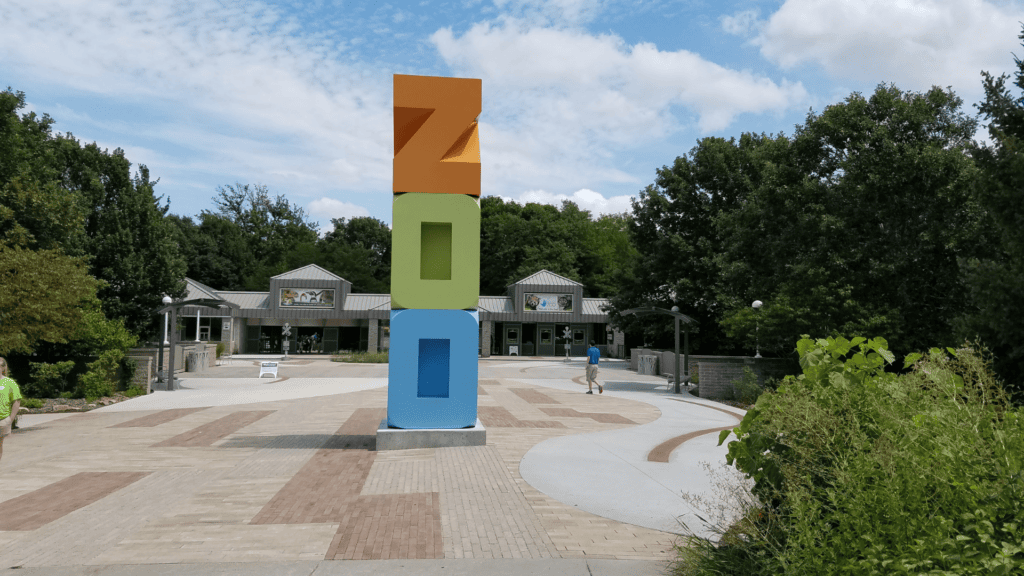
Green stormwater infrastructure uses soil, vegetation and natural processes to manage runoff near its source. Common examples include rain gardens, bioretention cells, bioswales and permeable pavement.
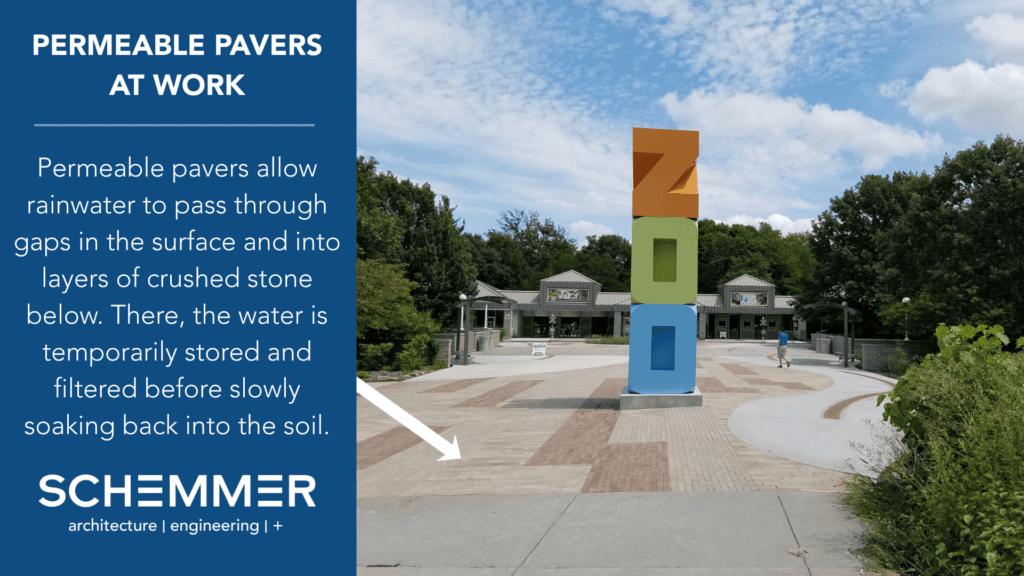
Rain gardens collect runoff in shallow landscaped areas. Bioretention cells use engineered soil, drainage components and plantings to filter and temporarily store water. Bioswales slow runoff as it moves through a site, while permeable pavement allows water to pass through the surface into a storage layer below.
These practices can reduce runoff, filter pollutants and become part of the landscape. They still need to meet the site’s drainage requirements and connect to a safe outlet when their capacity is exceeded.
Green, Gray or Both?
Several factors help determine whether green stormwater infrastructure belongs in the plan.
1. Cost and project value
Cost often has the greatest influence. The comparison should include design, construction, land use, maintenance and service life.
Some benefits are harder to show on a bid tab. A visible stormwater feature may improve a site, support habitat or create an educational opportunity. The practical question is whether those benefits, along with drainage and water-quality performance, justify the investment.
2. Space and soil conditions
Rain gardens and bioretention cells need room. Campuses, parks and new developments may have landscaped areas that can serve two purposes. Dense sites may require underground detention, storm sewer improvements or smaller practices built into parking islands.
Utilities, nearby foundations, clay soils, compacted fill and high groundwater can limit where infiltration is practical. Soil testing helps determine what will work. Where water drains slowly, an underdrain may be needed.
3. Drainage area and downstream capacity
A rain garden receiving rooftop runoff faces a different load than a bioretention cell serving a large parking lot. Engineers consider the drainage area, rainfall criteria and available storage, along with what happens after the feature fills.
Slowing runoff upstream can help an older storm sewer during smaller storms, but the entire drainage system still needs to work during larger events.
“We have seen sites where a stormwater idea looks great by itself, but it conflicts with a utility, takes away needed parking or does not work with the grading. The sooner we can look at all of those pieces together, the more options the owner has and the less likely we are to redesign something later,” said Ryan Bell, PE, Civil Engineer.
4. Water-quality and flood-control goals
Green infrastructure can capture smaller, frequent rainfall events and filter pollutants near their source. Major storms may require pipes, channels, detention basins and overflow routes to move water away from vulnerable areas.
A practice designed for water-quality treatment may not provide the same benefit as one designed for flood control. The goal has to be clear before the solution is selected.
5. Maintenance and site integration
Every stormwater system requires maintenance. Green practices may need sediment removal, inlet clearing, weed control and inspections for erosion or standing water. The owner should identify and fund that work before construction.
Early coordination can also make stormwater features feel like part of the site instead of leftover infrastructure.
“When stormwater design is treated as a late-stage add-on, you’re forced into reactive compromises. Early planning and coordination allow green infrastructure to do double duty, managing stormwater while also enhancing how people actually experience the space,” said Paul Fallon, CADD Technician.
Local requirements also matter. Community standards may address runoff rates, water-quality volume, infiltration testing, setbacks, overflow design and maintenance agreements. Early conversations with the reviewing agency can clarify what will receive credit.
Can Green Infrastructure Replace Storm Sewers?
Sometimes green infrastructure can reduce the size or extent of a conventional system. On a small drainage area, it may manage most of the runoff. Larger community, commercial and institutional projects will usually need storm sewers, storage or another dependable outlet as well.
Once a rain garden, bioretention cell or permeable pavement section fills, the excess water needs somewhere safe to go. That may require an overflow structure, underdrain, pipe, surface drainage route or detention basin.
Green infrastructure handles the rainfall it was designed to receive. The rest of the system takes over when flows exceed that capacity.
Plan for Stormwater Early
Green infrastructure is easiest to incorporate before the site plan is fixed. Early evaluation gives the team time to investigate soils, coordinate grading and utilities, shape parking and landscaping, plan overflow routes and assign maintenance responsibilities.
Schemmer’s civil engineering team helps municipalities, developers and institutional owners compare stormwater options early in the planning process. The goal is not to force every project toward green or gray infrastructure. It is to build a system that performs as intended, fits the site and can be maintained for years to come.
Have questions about stormwater requirements or drainage options for an upcoming project? Talk with Schemmer’s civil engineering team while the site plan still has room to adapt.
SCHEMMER – ARCHITECTURE | ENGINEERING | +
At Schemmer, we believe that great design goes beyond structures; it strengthens communities. As a full-service architecture, engineering, and construction field services consultant, we deliver innovative solutions that enhance the built environment and improve lives.
Since 1959, we have been shaping the future while honoring our legacy. With nine offices across six states in the Midwest, our expertise reaches coast-to-coast, bringing thoughtful, sustainable, and impactful solutions to every project.
Our Comprehensive Services:
- Architecture
- Structural Engineering
- Mechanical Engineering
- Electrical Engineering
- Site/Civil Engineering
- Transportation Engineering
- Water/Wastewater Engineering
- Surveying
- Interior Design
- Geotechnical Engineering
- Field Services
At Schemmer, we don’t just design projects, we create lasting impact. Let’s design a better future together.